Alain de Botton - the philosopher, author and art critic- talks about the value of time and the changing perception of time when discussing Christian Marclay's The Clock. De Botton discusses with Marclay the feeling the audience gets when sitting, watching The Clock. Marclay agrees with him that it is extremely anxiety inducing as we are constantly conscious of the time, being reminded of it every couple of seconds almost like a count down. Time is precious and, as Benjamin Franklin said, time is money. The power that time holds, although be it a social construction, means that we all live under its control and oppression especially in this age of modern capitalism in which time is a matter of life and death to most. We must 'please, tame and get on top of (it)' in order to survive. De Botton refers to this as living under 'the tyranny of time'. We are so conscious of the minutes, days and months ticking away when we feel we are wasting out time that we do anything to avoid this feeling.
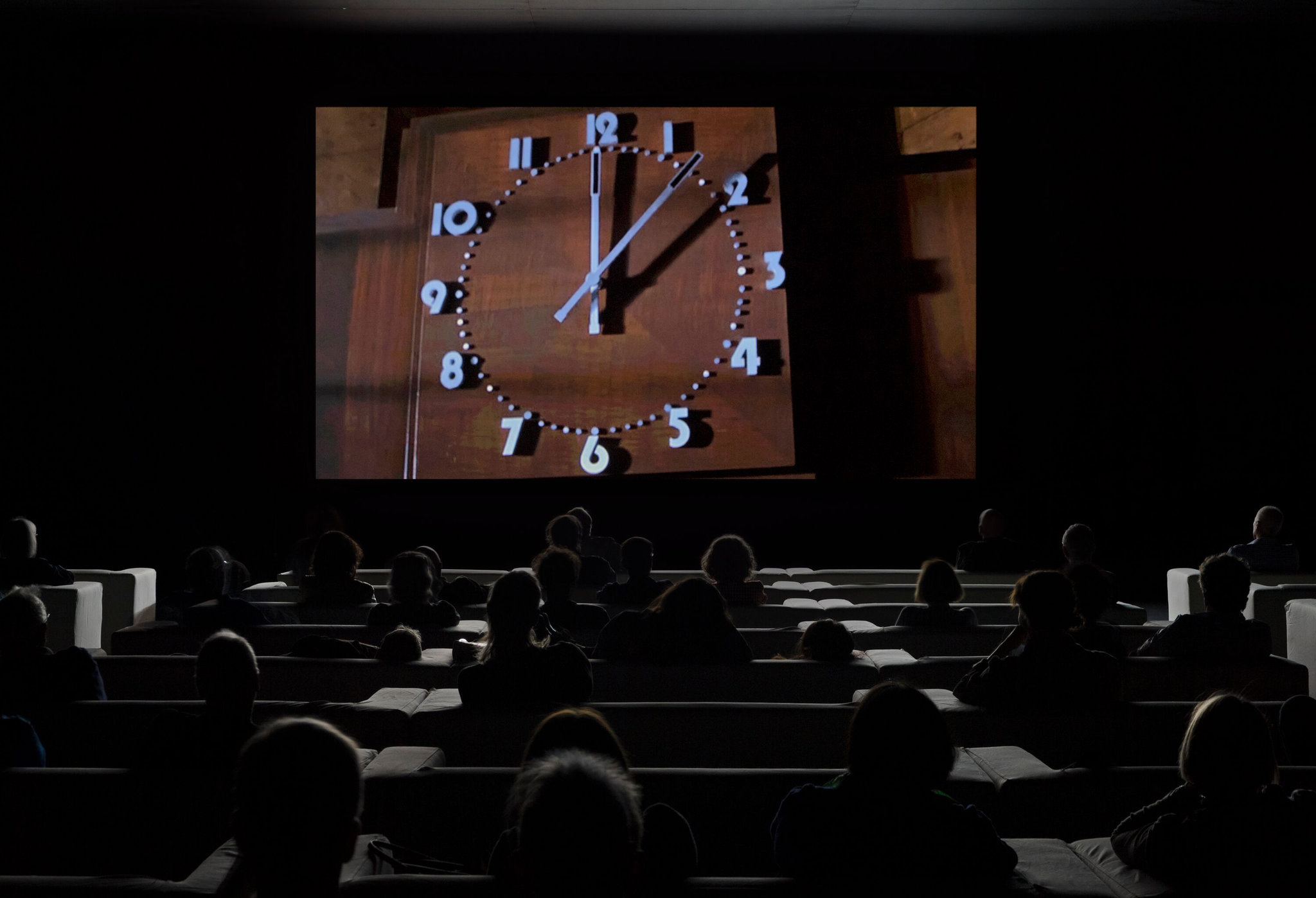
Christian Marclay's The Clock
In lockdown however, the perception of time is like no other in life. Time is moving so fast. Although there is little to do because there are no events it feels like one long day. There is nothing to distinguish time in, very unlike The Clock. The days also do not feel long but feel fast. If there is a task to do I will put it off the whole day and be lazy because I know there is no deadline and no point- I can just do it tomorrow because there is nothing to do tomorrow. There is little motivation to do anything. So the day is spent in the same position on the bed and before I know it it's time for dinner and to sleep. This could be over thought and I could think that life would always be this awful sense of time slipping away and my life being spent doing nothing but there is one comforting thing knowing that we have done this before and in the future will be looking back at this time of life as one big chunk- not needing to distinguish each days as we move forward into the hopeful future. Time also feels fast as I am agitated. Every day that I am in lockdown I feel anxious and restless to get out. With each day I am on a treadmill churning out these days of waste and I cannot stop. We are already in February and I haven't seen my friends since November or December. March is fast approaching. How did it all go so fast? And what has even happened?
The future is slipping away into the past.
Envisioning the near future promotes as much anxiety as thinking about the very distant future and I dare not dream about the next few months although there is occasionally a sliver of hope. This feeling towards the future is well presented by Oscar Murillo's series of paintings entitled Catalyst. The pieces started from drawings. Murillo says he feels a drawing is the physical discharge of energy and anxiety whilst the painting aspect of the piece is filled with allure and romanticism. This I feel depicts the dreams and dreads of the future perfectly; it can be romanticised with rose tinted glasses as the greener grass as well as being enveloped in the fear of unknowing. In my work I would like to explore this aspect of the future-the future after lockdown and how we envision the next months of our lives. With the news of the vaccines and schedules the government has placed out with dates, ones' mind wanders around the possibilities and how likely it is we will be let down. We are tiptoeing on egg shells in our mind whether we should survive through this lockdown to get to the other side, the future, or concentrate on the near future and bury our heads in the small concerns, 'what should I buy at the shops to cook for dinner?'. I would like to be able to present the thought of the future as both rose tinted and anxiety inducing in my work. I would also like to effectively present the claustrophobia that comes with lockdown.
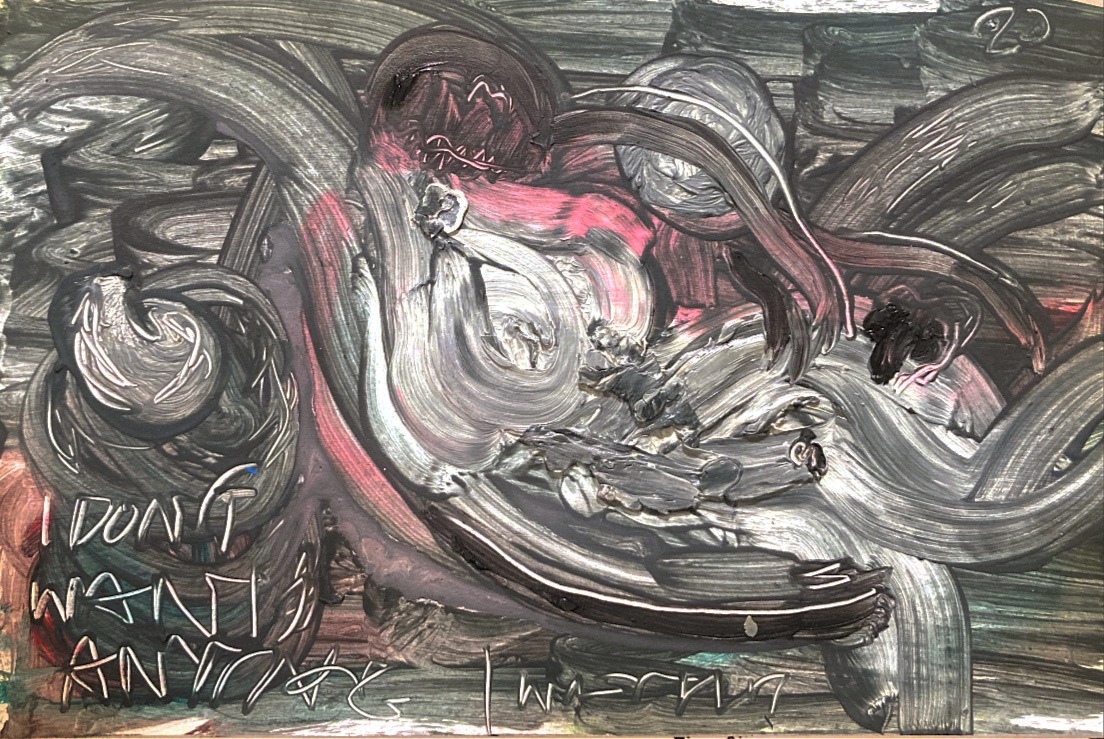
Oil on paper 148 x 210